
Laboratory
Lorem ipsum dolor sit amet, consectetur adipiscing elit. Ut iaculis, ipsum vel mollis interdum,
lorem lectus semper quam, vel tristique velit dui non leo. Integer quis metus.
Our laboratory provides specialized mercury quantification and speciation services to support
the oil and gas industry in managing mercury-related operational, safety, and environmental risks. We accurately determine total mercury concentrations and differentiate between
inorganic and organic mercury species, recognizing that each form behaves differently in
hydrocarbon systems and presents distinct implications for equipment integrity, catalyst
performance, occupational exposure, and environmental compliance.
We offer analytical services for a wide range of oil and gas matrices, including crude oil,
condensate, natural gas, produced water, sludge, catalysts, process chemicals, and
environmental samples, as well as gaseous and vapor-phase samples from processing and
offshore facilities. All analyses are performed in accordance with internationally recognized
analytical methods, ensuring reliable, defensible data suitable for operational decision-making
and regulatory reporting.
All testing activities are conducted within an ISO/IEC 17025:2017 accredited laboratory,
ensuring the use of validated analytical methods, calibration with traceable certified reference
materials, and stringent quality assurance and quality control procedures. This accreditation
provides confidence in data accuracy, consistency, and compliance with industry and regulatory
standards.
In addition to mercury analysis, our laboratory is equipped to perform gross alpha and gross
beta activity measurements for oil and gas and environmental samples. These radiological
screening services support naturally occurring radioactive material (NORM) monitoring,
contamination assessment, and compliance with radiation safety and environmental
regulations. Our integrated analytical capabilities enable operators to proactively manage risk,
maintain regulatory compliance, and support safe, efficient, and sustainable operations.
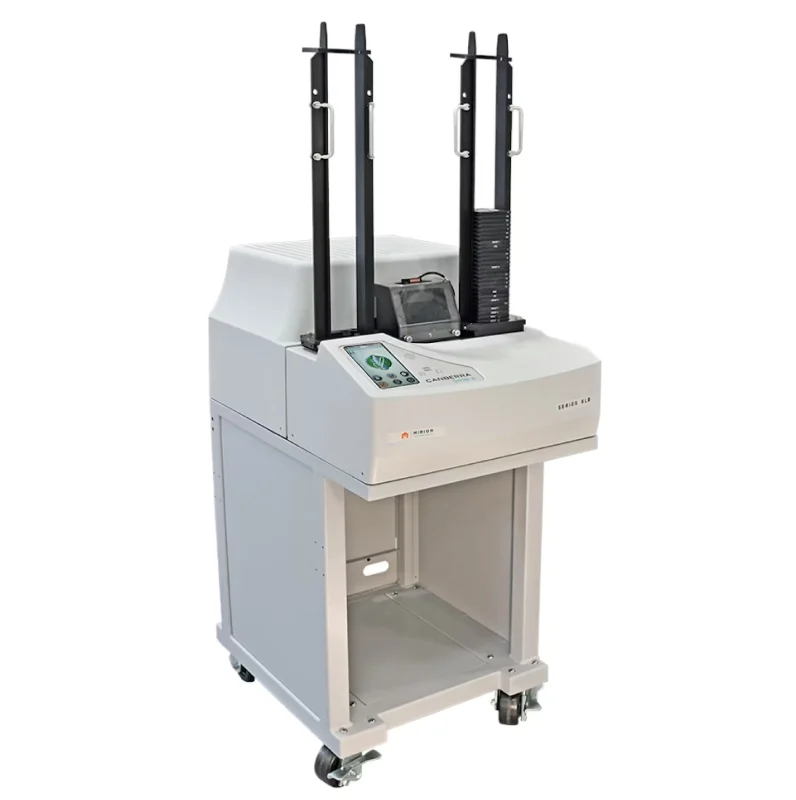
As part of our TENORM (Technologically Enhanced Naturally Occurring Radioactive Material)
assessment services, our laboratory conducts gross alpha and gross beta activity measurements
on wipe test samples to evaluate surface contamination within oil and gas facilities. Wipe testing
is a critical radiological monitoring method used to assess the presence and spread of
radioactive contamination on equipment, piping, vessels, tools, and work surfaces, particularly
in areas where NORM may accumulate during production, processing, maintenance, or
decommissioning activities.
The wipe test technique involves collecting removable surface contamination using standardized
swabs or filter media, allowing for the assessment of potential radiological exposure risks to
personnel through contact or resuspension of radioactive particles. This method supports
effective radiation protection programs by identifying contamination hotspots, verifying
cleanliness following decontamination activities, and ensuring work areas meet acceptable
radiological safety limits before maintenance or re-entry.
All wipe test samples are analysed using a Canberra Series 6 Gross Alpha/Beta Counter, a robust
and industry-accepted radiometric system widely used in oil and gas, nuclear, and environmental
applications. The instrument provides sensitive and reliable detection of alpha- and beta-
emitting radionuclides commonly associated with TENORM, such as radionuclides from the
uranium and thorium decay series. The system is routinely calibrated using traceable reference
sources and operated in accordance with validated counting protocols to ensure accurate,
repeatable, and defensible results.
Gross alpha and gross beta measurements provide an effective screening-level assessment of
radiological contamination, enabling rapid decision-making for operational control, radiation
safety management, and regulatory compliance. The results support compliance monitoring,
contamination assessment, and reporting requirements, and form a critical component of
integrated NORM and TENORM management programs within the oil and gas industry. Through
accurate radiological screening and robust quality control, our services help operators maintain
safe working environments, manage regulatory obligations, and minimize radiological risks
across upstream, midstream, and downstream operations.
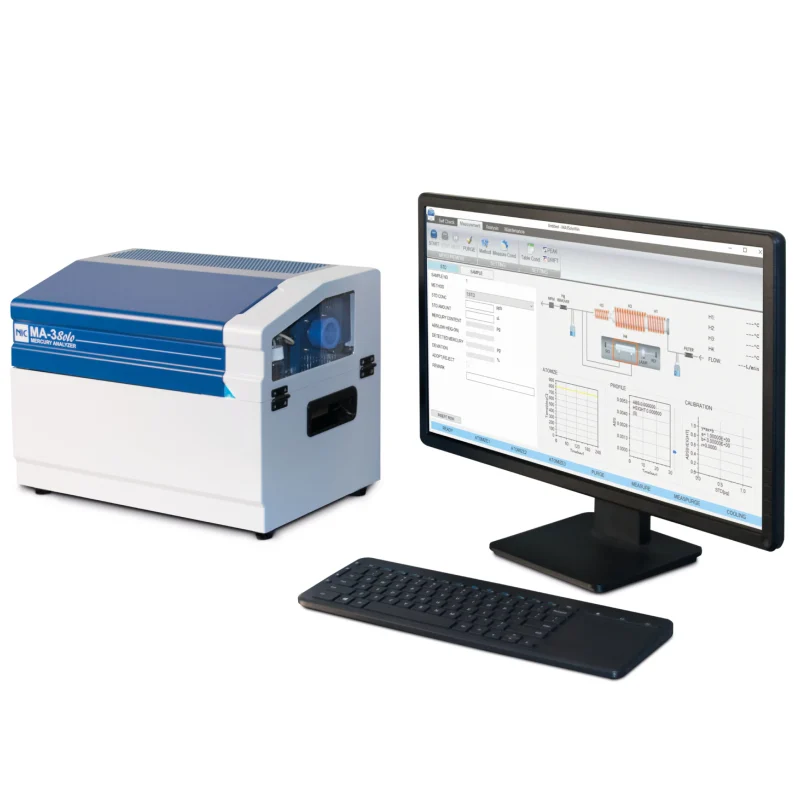
Our laboratory provides specialized mercury quantification and speciation services to support
the oil and gas industry in managing mercury-related operational, safety, and environmental risks. We accurately determine total mercury concentrations and differentiate between
inorganic and organic mercury species, recognizing that each form behaves differently in
hydrocarbon systems and presents distinct implications for equipment integrity, catalyst
performance, occupational exposure, and environmental compliance.
We offer analytical services for a wide range of oil and gas matrices, including crude oil,
condensate, natural gas, produced water, sludge, catalysts, process chemicals, and
environmental samples, as well as gaseous and vapor-phase samples from processing and
offshore facilities. All analyses are performed in accordance with internationally recognized
analytical methods, ensuring reliable, defensible data suitable for operational decision-making
and regulatory reporting.
All testing activities are conducted within an ISO/IEC 17025:2017 accredited laboratory,
ensuring the use of validated analytical methods, calibration with traceable certified reference
materials, and stringent quality assurance and quality control procedures. This accreditation
provides confidence in data accuracy, consistency, and compliance with industry and regulatory
standards.
In addition to mercury analysis, our laboratory is equipped to perform gross alpha and gross
beta activity measurements for oil and gas and environmental samples. These radiological
screening services support naturally occurring radioactive material (NORM) monitoring,
contamination assessment, and compliance with radiation safety and environmental
regulations. Our integrated analytical capabilities enable operators to proactively manage risk,
maintain regulatory compliance, and support safe, efficient, and sustainable operations.
As part of our TENORM (Technologically Enhanced Naturally Occurring Radioactive Material)
assessment services, our laboratory conducts gross alpha and gross beta activity measurements
on wipe test samples to evaluate surface contamination within oil and gas facilities. Wipe testing
is a critical radiological monitoring method used to assess the presence and spread of
radioactive contamination on equipment, piping, vessels, tools, and work surfaces, particularly
in areas where NORM may accumulate during production, processing, maintenance, or
decommissioning activities.
The wipe test technique involves collecting removable surface contamination using standardized
swabs or filter media, allowing for the assessment of potential radiological exposure risks to
personnel through contact or resuspension of radioactive particles. This method supports
effective radiation protection programs by identifying contamination hotspots, verifying
cleanliness following decontamination activities, and ensuring work areas meet acceptable
radiological safety limits before maintenance or re-entry.
All wipe test samples are analysed using a Canberra Series 6 Gross Alpha/Beta Counter, a robust
and industry-accepted radiometric system widely used in oil and gas, nuclear, and environmental
applications. The instrument provides sensitive and reliable detection of alpha- and beta-
emitting radionuclides commonly associated with TENORM, such as radionuclides from the
uranium and thorium decay series. The system is routinely calibrated using traceable reference
sources and operated in accordance with validated counting protocols to ensure accurate,
repeatable, and defensible results.
Gross alpha and gross beta measurements provide an effective screening-level assessment of
radiological contamination, enabling rapid decision-making for operational control, radiation
safety management, and regulatory compliance. The results support compliance monitoring,
contamination assessment, and reporting requirements, and form a critical component of
integrated NORM and TENORM management programs within the oil and gas industry. Through
accurate radiological screening and robust quality control, our services help operators maintain
safe working environments, manage regulatory obligations, and minimize radiological risks
across upstream, midstream, and downstream operations.

With state-of-the-art equipment for mercury analysis, HG Solution Sdn Bhd is capable to conduct mercury
analysis in all type of samples such as crude, condensate, water, gas and sludge/ solid. The laboratory,
which is in Bandar Baru Bangi, Selangor is in the process to procure more analysis equipment for mercury
analysis. Currently HG Solution laboratory is capable to conduct Total Mercury and Mercury Grouping
(Elemental, Organic & Inorganic) for water, hydrocarbon, gas and solid (sludge, soil, sand etc) samples.
Mercury speciation currently can only be conducted for condensate and gas samples. Analysis of total mercury is based on UOP938 standard method and sampling is based on ASTM D6350.
SCOPE OF TESTING: MERCURY & RADIOACTIVE SAMPLES
| Material/Products Tested | Type Of Test/ Properties Measured/ Range Of Measurement |
Standard Test Method/ Equipment/Technique |
|---|---|---|
|
Petroleum and Petroleum Products
Liquid Hydrocarbons (Light & Heavy)
Gas
Liquid and Solid
|
Total Mercury
Total Mercury
Total Mercury
|
UOP 938-20 / ASTM D7623-20
ASTM D5954-98 (14)
In-house Method IH-938-7473
Based on UOP-938-20 and EPA 7473
|